Thursday, February 19, 2015

Vogler's Visual Metaphors: The Magician

"We go step by step by step by step into the darkness. The actual movement is the only truth." —Spegel

One year following the release of The Seventh Seal, Swedish director Ingmar Bergman came out with yet another astounding film entitled Ansiktet, or The Magician. Utilizing a number of actors from the former film (including Max von Sydow, Gunnar Björnstrand, Bengt Ekerot, Bibi Andersson, and Åke Fridell), Bergman produced a story that challenged viewers to question all they held true about science and superstition.

Description taken from The Criterion Collection:
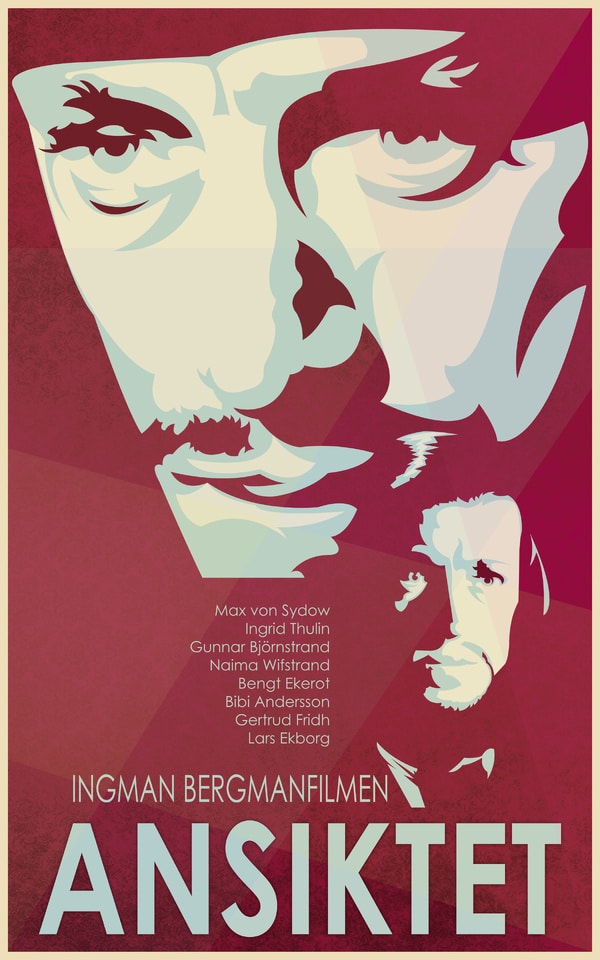

I wrote a post on The Seventh Seal back in December and always planned on doing a follow-up with another of Bergman's creations...only I had a little difficulty acquiring a copy on my ex-student, unemployed English major budget. Finally, however, I have seen the film (never you mind how) and can explain some of its symbolism.

Not rated.
I suggest PG as there is no on-screen violence, gore, or sex...though allusions are made.

Clocks: Obviously, these objects epitomize time and the passage thereof. The face of a clock is round, symbolizing the fact that time continues on in a cyclical manner. Its hands move steadily, incrementally, and—in the context of this film—they represent everyone's inevitable progress toward death. While time itself is endless when looked at beyond the circumstance of any one individual, it is still a reminder for those who breath and can perceive the notion of a conclusion to their own lives that the mechanisms will eventually, mercilessly wind down.

One character, Ottilia Egerman, continues to grieve the loss of her daughter. She tries to seduce Volger in the hope that he (with his mysterious manner) can somehow alleviate her suffering. When that fails, she turns to her husband. They sit alone in their bedroom, the only sound the ticking of a clock. Its pendulum swings back and forth to mark each and every second as they fall away into the past, bringing its listeners ever closer to an infinite cessation of being.

"Can you do me a favour? Could you please stop the clock?" —Ottilia
Also, look at that exquisite mise-en-scène. UGH.

Mirrors: Simply put, mirrors are a symbol of reflection...'cause that's what they do: reflect. Physical mirrors are used to capture images of everyday objects, but there exists an idea of the 'spiritual mirror', i.e., a mirror which echoes human consciousness, the results of our actions, and the rewards/punishments "which the consequences of our actions have brought upon us," according to fellow blogger Jodseph Panek.

The Magician takes place during the mid-1800s, so the reflective surface of choice in the rich Consul Egerman's home is glass—very clear, but easy to shatter. After Doctor Vergérus performs an autopsy in the attic, he is assaulted by visions of an unmasked Vogler. He sees the presumably dead man standing just behind him right before the glass within which both of their forms are reflected inexplicably cracks. Spooky. The point here is that Vergérus has wronged a man and is forced to face the fallout, be it guilt, a glimpse into the unknown, or whatever else the universe has in store.

Check out all of those visual metaphorsit was no accident that they were placed together in this shot.

Shadows: It is difficult not to get all doom-and-gloomy with Bergman's films. He incorporates a lot of philosophy, so motifs such as the truth of reality and the point of existence are bound to pop up all over the place. The Magician—much like The Seventh Seal—covers the human struggle for understanding in a number of ways. This includes, of course, the perception of death. What lies beyond the veil? Well, who really knows?

What I do know is that shadows tend to be symbolic of something dark or evil which, unfortunately, is how many view death. Shadows are also associated with projections, meaning that people project themselves onto others, creating a sort of shadow-self that contains unconscious parts of the original. This is important to the film, as a major scene takes place between Vogler and Johan Spegel in which the latter is thought to have risen from the dead. He views himself as one of God's unused tools; a "convincing" ghost rather than a human with a purpose. Spegel muses, "a shadow of a shadow," then places his hand before Vogler's projection apparatus.

Spegel's shadow puppet reflects his self-image:
a slave with cut strings bound for nothing but destruction.

Hands: It is impossible not to notice the number of times Bergman makes the human hand a point of focus in this film. While hands have many meanings in different cultures around the world, they tend to represent connectivity. Hands can makes signs and gestures that indicate how a person is feeling just as they can be used to put thought into action. They can help and harm, reveal and hide. Remember that Vogler is a magician and, as such, performing sleight of hand is a way of life.

"Gash in the eye, blood in the mouth, fingers gone, broken neck.
He calls you down, he calls you out, beyond the dead
the living, the living dead, beyond raised hands..." —Aunt

For further information:

Tuesday, January 20, 2015

Philosophy and Plot Summary: The Painting

As a sort of follow-up to one of my recent posts about a film of the same genre, I decided to take a look at the French film The Painting (AKA Le tableau). Originally released in 2011, it was shown at a handful of U.S. film festivals throughout 2012 and made available on Netflix in late 2013. I only just got around to seeing it for the first time a few days ago (whoops) and got a lot more than expected. Iceberg-size spoilers ahoy!

Not rated.
I suggest PG as one poor fella is beaten to death by a gang of privileged prats.

It was not so much the various artistic techniques used by the creators that struck me—though they were, at the very least, interesting to behold. Instead, it was the profound nature of the story. What at first I took to be a simple retelling of Romeo and Juliet turned out to have a deeper commentary on social class and its inherent discrimination, deformity as uniqueness/identity, the need to determine the existence of a divine creator, as well as reconciling the beautiful with the terrible; the created with the destroyed.

There are three rungs to the social ladder in The Painting. Residing at the bottom are Sketchies—the Painter's doodles or—as some argue—his mistakes. Halfies are a little more filled out in form, possessing three dimensions and stains of colour, but still incomplete. The blessed 'chosen' are the Alldunns—those requiring no further work. They reside in the Castle above the Gardens (where the Halfies are sequestered) at the edges of the Forbidden Forest (where the Sketchies a forced to hide). Holding the seat of authority is one known as The Great Chandelier; this is a man who assumes knowledge of the Painter's 'plan' and is therefore dangerously influential.

Claire, a Halfie, and Ramo, her beloved Alldunn, meet in secret to avoid the persecution of their respective tribes. Soon the two are forced to separate and Lola, one of Claire's Halfie friends, joins Ramo and a Sketchie named Quill on a quest to find the Painter. Their mutual goal: to get their creator to finish the work he abandoned.

Ramo, Lola, and Quill making their way through the Forbidden Forest.
Note the physical divisions placed between each character in the scene.

It is through the journey of these unlikely compatriots that the audience becomes increasingly aware of how deeply their cultural stratification is rooted. While certainly more open to equality than others, Ramo and Lola remain in a more preferred position than Quill. Ramo is a privileged Alldunn whose respect for Halfies stems mainly from his blind love for Claire. Though he abhors injustice and the gang mentality exhibited by his fellow Alldunns, his dislike for Sketchies is made apparent on several occasions. Unlike Ramo, Lola is sympathetic to Quill's bumbling nature, but it could be said that she herself is a unique case in that she does not wish to be 'completed'. The girl feels that there is more to life than residing in the Castle and believes that something special is waiting for her beyond the confines of the world in which she lives. She is content with herself as an individual, embracing her aesthetic flaws by instead viewing them as unique attributes. While Lola does not understand Claire's feelings for Ramo, she is at least willing to help him along the way and, eventually, they gain a certain level of esteem for one another.

The studio.
Lola: "Maybe [the Painter] is nearby. You know, listening to us."
Quill, sarcastically: "Sure, that sounds likely!"

Back at the Castle, treatment of the lower classes gets steadily worse. The Great Chandelier is power-hungry and grows suspicious of Ramo's actions, so he takes Claire hostage and orders that the Sketchies be rounded up to work as slave labor. Since the Sketchies are barely formed creations, though, they are somewhat inept at carrying out basic tasks; The Great Chandelier is not pleased. He commands that the Halfies be abducted and their homes set on fire. One Alldunn youth jeers, "Sketchies, Halfies, what's the difference?"

Little do they know that the group of outcasts has made its way out of the Forbidden Forest—a place rumored to be deadly but what actually turns out to be both peaceful and beautiful. A general fear of the unknown resonates throughout this film, being the thing that keeps Halfies and Sketchies alike 'in their place' and prevents them from leaving their lot to pursue a better life away from the judgemental Alldunns.

Lola and the gang end up outside of their original painting in a derelict art studio. They discover that there are others like them who have been left to fend for themselves. Searching for answers and receiving none (not to mention having to face the horrifying fact that the Painter destroyed a vast amount of his own work without considering the creations inside), the trio are left to their own devices.

Ramo decides to come up with a solution of his own.

Taking various tubes of paint found around the studio, the group makes its way back to the Castle. Ramo gets captured and is set to face trial with Claire. Quill comes across the escaped Halfies who go on a bit of a creative rampage with the newfound colours, completing themselves as they see fit. They help the lovebirds escape and show the Alldunns who's boss...sort of.

The ending is actually a little disappointing. The Alldunns admire the freshly finished Halfies, wanting to try out the new colours themselves. Everyone joins in splattering The Great Chandelier with paint, effectively knocking him down a few pegs. Oddly, though, the Halfies and the Sketchies take no action against the Alldunns for all of their past injustices. They brutally murdered one of Quill's friends and forced others to be subservient to them by ruling through the use of violence and fear tactics, but nooooo, now that everyone can be an Alldunn things are just hunky-dory. Perhaps that is why Lola leaves without partaking in the painting party. She goes back to the studio and discovers a crack in the brick wall that leads outside into a photo-realistic world. The Painter sits before a canvas, musing over the ocean. They share a small exchange before Lola goes off to see more of the world. La fin brusque.

Lola, to the Painter: "Now I want to know who painted you!"

I realized partway through writing this post that I was committing the cardinal sin of plot summarization. Shame on me. Out of college for only one month and I am already losing my touch. :P

For further information:

Sunday, December 14, 2014

Symbolism: The Seventh Seal

"Who will take care of that child? Is it the angels or God or Satan or just emptiness?" Jöns

During the mid-fourteenth century, knight Antonius Block (Max von Sydow) and his squire Jöns (Gunnar Björnstrand) have finished their crusade in the Holy Land and return to their homeland of Sweden to find it devastated by the bubonic plague. Block challenges Death (Bengt Ekerot) to a game of chess, hoping to buy some time before he himself is taken. The man desires knowledge of the afterlife (a wee bit like good ol' Doc Faustus), believing that his life has been pointless and that God is, if not uncaring, then unfairly silent. As they journey to Block's castle, the duo run into a troupe of performers, a procession of flagellants, and masses of terrified of villagers—some of whom join Block's entourage as he makes his way home and tries to escape the reach of the black death and an impending apocalypse.

This 1957 film by Ingmar Bergman (based on his own play entitled Wood Painting), is widely known for being philosophical and contains such themes as the silence of a 'Divine Being', the indifference of death, the meaning of human existence, et cetera. Because of its use of motifs, I thought it pertinent to do a post on symbolism present in The Seventh Seal. If you are unaware, a symbol is a thing that stands for something else—especially a material object that represents something abstract.

Not Rated. I would say at least PG for portrayals of death and implications of rape.
Amazing poster by artist Jim Perez, taken from here.

The number seven: The title of the film refers to a passage from the Book of Revelation in Christian eschatology. It is used both at the beginning and near the end of the story, each time emphasizing the number seven. That seems to be a popular digit in the Bible (used no less than seven hundred thirty-five times throughout—fifty-four in Revelations alone). In the context of the film, it is introduced thusly:

And when the Lamb broke the seventh seal,
there was silence in heaven for about the space of half an hour.
And I saw the seven angels which stood before God;
and to them were given seven trumpets.

According to BibleStudy.org, "seven is the number of completeness and perfection (both physical and spiritual). It derives much of its meaning from being tied directly to God’s creation of all things." I found this interesting, as the film's focus seems to be more on destruction. A genius parallel made by Bergman? Both Block and Jöns speak of mirroring themselves, and creation v. destruction is a perfect duality reflected in all aspects of life. Anyhow, the 'breaking' of the seven seals is meant to bring on the apocalypse, and the only one deemed worthy of opening the book/scroll that is held shut by the seals is a "Lamb having seven horns and seven eyes." To the characters in this story—and to those who lived during that time in history—surely the arrival of such a plague would have made it seem as though the end was nigh and punishment from their God was imminent.

Crows: This symbol stretches well outside the confines of the film and into both folk tradition and pop culture. Most obviously, perhaps, crows represent death as they are scavengers that feed off of the freshly fallen. Their black colour paints them as harbingers of evil and allies of the occult. Throughout history, people have looked upon crows as masqued holders of both great secrets and memories of ancient ways. The very first shot in The Seventh Seal is of a cloudy sky, a crow streaking across the heavens.

The sea: Block and Jöns arrive in their native land on a beach. This is also where the former first encounters the personification of Death and where the travelling acrobats take refuge at the end of the film. The ocean symbolizes travela journey—as well as earth's primality. As I recently learned in an Asian studies/humanities course, water is also a form of purification...though I am not sure if the same understanding is held in Western European countries where, in the middle ages, many pious individuals refused to bathe as they believed it to invite sinfulness andironicallydisease. At any rate, Block washes his face with sea water and prays next to the waves, so he must have felt something divine at such a locale. (For those interested, these scenes were shot at Hovs Hallar in north-western Scania.)

One of the flagellants grasping a human skull. Kudos to the props dept...I've seen worse.

Black & White: Colours should also be taken into consideration when analyzing symbols. These two are especially important not only because The Seventh Seal is filmed sans colour so as to better highlight the striking contrast, but also because of the game of chess between Block and Death. The board and the pieces are clearly defined, illustrating the difference between what some perceive as good v. evil. When first choosing their sides Block remarks, "You have black," to which Death responds, "It's most appropriate, isn't it?" It is also worth noting that whilst Death is clad in a pure black cloak his visage is stark white like a skull. I choose to interpret this particular symbolism as follows: we all die, our flesh fading to cartilage, our consciousness turning to nothingness. Deep, eh?

Travel: Life is transitory. The characters in this film move from one place to the next only to reach their final destination in death.

Religion: 'Protection' from death. Priests act as fearmongers, going so far as to commission a painting of the dance of death to "remind people they will die," and hiring the troupe of performers to put on a play during an All Saints Festival in Elsinore that will drive more people to repent for their sins. Even Block makes a confession to someone whom he thinks is a holy man, only later finding out that it is Death in disguise. The reaper infiltrates all aspects of life—religion is naught but a construct to fend off our innate fears.

Omens of the Last Day: Medieval villagers tend to be a little superstitious. To be fair, I would be too if "a woman gave birth to a calf" or if people had "cleaned themselves by fire and died." That's some dark juju. One of my favourite aspects of learning history has to do with understanding the mentality of a society, something which is often tied to belief systems and the intersection of faith with daily life. While this film is more allegorical rather than historically accurate (esp. given that the last Swedish Crusade took place in the late 1200s and the plague didn't hit until half a century later, or that large scale witch hunts didn't begin until the 1400s), each character's reaction to his or her circumstance was believable enough to be appreciated.

Names: "Antonius" is Swedish in origin and means "priceless," much like life, as he discovers. Mia (Bibi Andersson), the female travelling performer whom Block becomes somewhat protective of, also goes by the name of Mary (as in the Virgin mother). To get back into colour symbolism for a moment, Mia wears white: something that is internationally recognized as purity. Her husband, Jof (Nils Poppe), is sometimes referred to as "Joseph." Biblical references abound. Spoiler: They and their infant son Mikael (AKA "Gift from God") are the only ones to survive. [Oh, by the way, that seven-horned, seven-eyed lamb from earlier? "Rachel" is Hebrew for "ewe." Just sayin'. o_o]

"I am unknowing." —Death

For further information:

Sunday, November 2, 2014

Animation, Music, and Title Sequences: A Cat in Paris

"In Paris, a cat who lives a secret life as a cat burglar's aide must come to the rescue of Zoe, the little girl he lives with, after she falls into a gangster's clutches."
—IMDB's description of A Cat in Paris (AKA Une vie de chat)

Rated PG for mild violence and action, plus some thematic material.

The creative team who put this film together did an excellent job combining animation (the style a mix of Cubism and Art Deco) with a jazzy, noir-esque OST. A snippet of this can be seen/heard in the title sequence in the below video. I just spent the last half hour trying to figure out specific HTML coding hijinks required by Blogger which would allow me to set the start and end time for this video, but my tech skills are apparently lacking. Skip to 2:13 and watch until 3:09 to see the title sequence.

The use of colour also helps set the tone.

This film has greatly increased my appreciation for animation as a serious form of storytelling. From the end of the nineties up until now, I have found that most forms of drawn or computer generated animationat least in the Western Hemispheretend to be light-hearted (The Triplets of Belleville and The Iron Giant are both obvious exceptions to the rule). Cartoons out of the '30s thru to the '60s were oftentimes quite creepy or incredibly violent (I'm looking at you, Disney and Warner Bros.). The '80s saw a regression into that same sort of darkness with films like The Brave Little Toaster and The Land Before Time...both of which I am sure will let loose some repressed nightmares tonight as I sleep. Such strolls through the uncanny valley aren't exactly my cup of tea.

I prefer animated films not for their superficiality but for being fantastical with a touch of realism. A Cat in Paris pulls this off by including a few of those 'darker' facets of life and portraying them in a not-so-fearsome light. Child abduction? Sure. Graphic child abuse? Hell no. Pets that protect their human companions? Sounds great. Animals that maul people? Not so much. The above may be construed as hypocritical as I adamantly believe in free speech/free art, but while I do not think any animated films should cease to exist simply because I do not agree with their storytelling techniques on a personal level, that does not mean I have to enjoy watching them...or, indeed, even watch them at all.

For more information: